


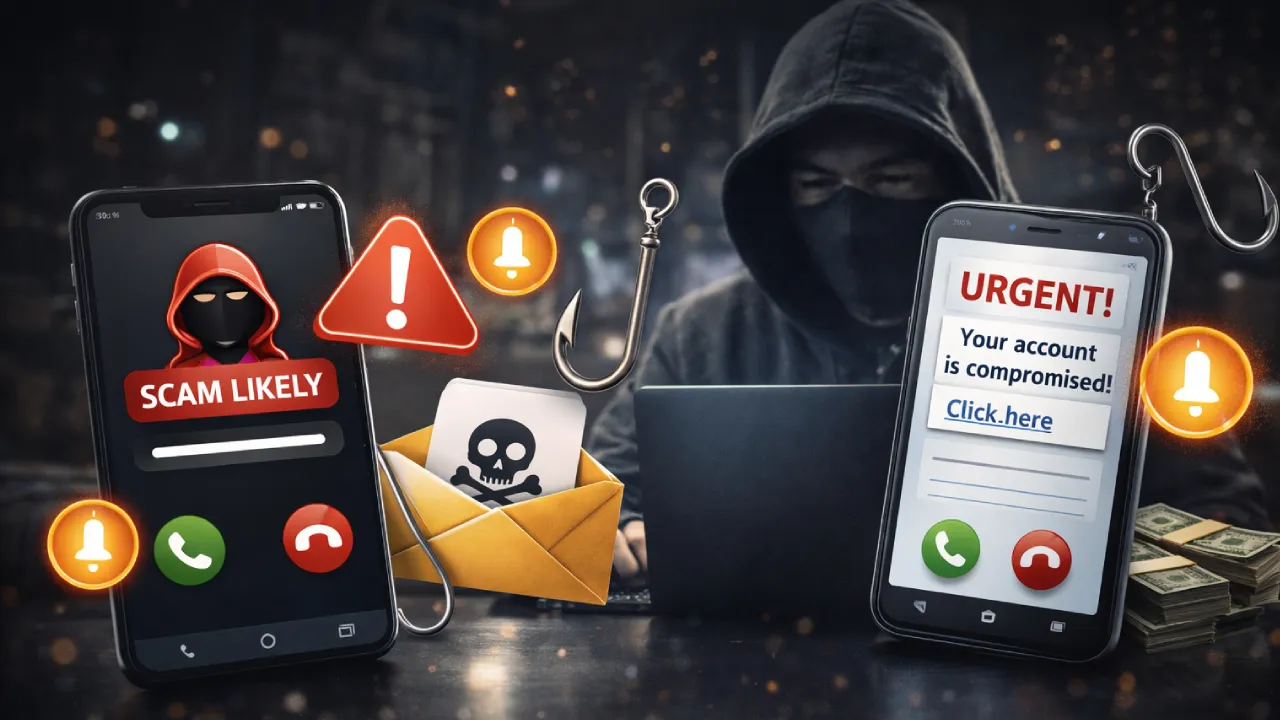
Call & SMS Scam Protection
Learn how call and SMS scams trick people into sharing sensitive information and how you can recognize and avoid these fraud attempts.
Call and SMS scams are common methods used by scammers to contact individuals through phone calls or text messages. They often pretend to be trusted organizations such as banks, delivery services, or government agencies to steal your personal or financial information.
Understanding Call & SMS Scams
Call and SMS scams are a type of fraud where attackers contact victims via phone calls or text messages pretending to be legitimate entities. Their goal is to trick people into revealing sensitive information such as OTPs, passwords, credit/debit card details, or banking information.
These scams usually create urgency, fear, or excitement, pushing victims to take immediate action like clicking malicious links, sharing confidential data, or making payments.
Such scams can target individuals, businesses, and people of all age groups.
Common Types of Call & SMS Scams
Fake Bank Calls
Scammers pretend to be from your bank and claim suspicious activity on your account, your card is blocked, or you must verify your details urgently.
Tax or Government Scams
Fraudsters pose as government officials and say you owe unpaid taxes, face legal action, or need to make immediate payments.
Delivery or Package Scams
Messages claim your package is delayed and ask you to click a link to reschedule delivery, which leads to fake or harmful websites.
Prize or Lottery Scams
Messages inform you that you have won a reward or prize and ask you to pay a fee or share personal details to claim it.
Tech Support Scam Calls
Scammers pretend to be from companies like Microsoft or Apple and claim your device is infected or hacked, asking you to install software or give remote access.
How to Recognize a Scam Call or SMS
Users should look for these warning signs:
- Urgent or threatening language
- Unknown or suspicious phone numbers
- Requests for OTPs, passwords, or sensitive information
- Requests for payment via gift cards or cryptocurrency
- Suspicious links in SMS messages
- Callers pretending to be trusted authorities
Always verify the source before trusting any unexpected call or message.
How to Stay Safe from Call & SMS Scams
To reduce the risk of scams, follow these best practices:
- Never share OTPs or passwords over calls or SMS
- Avoid clicking unknown or suspicious links
- Verify calls directly with official sources
- Block suspicious numbers
- Enable spam filters on your device
- Use trusted security applications
If something feels suspicious, always double-check before taking action.
What To Do If You Receive a Scam Call or SMS
- Do not respond or engage
- Do not click any links
- Block the number immediately
- Report the number as spam
- Inform your bank if any financial information was shared
If You Have Already Been Scammed
Take immediate action:
- Contact your bank or card provider immediately
- Change all your passwords
- Report the incident to authorities
- Monitor your financial activity closely
Why Awareness Matters
Scammers constantly evolve their tactics, but awareness is your strongest defense.
By understanding these scams, you can protect your personal information, avoid financial loss, and help others stay safe.